BUILDING GREEN PASTURES
Raising the hay barn
A crane, a scissor lift and a lot of trusses. The day the hay barn got its roof.
Yen Lee · 3 min read
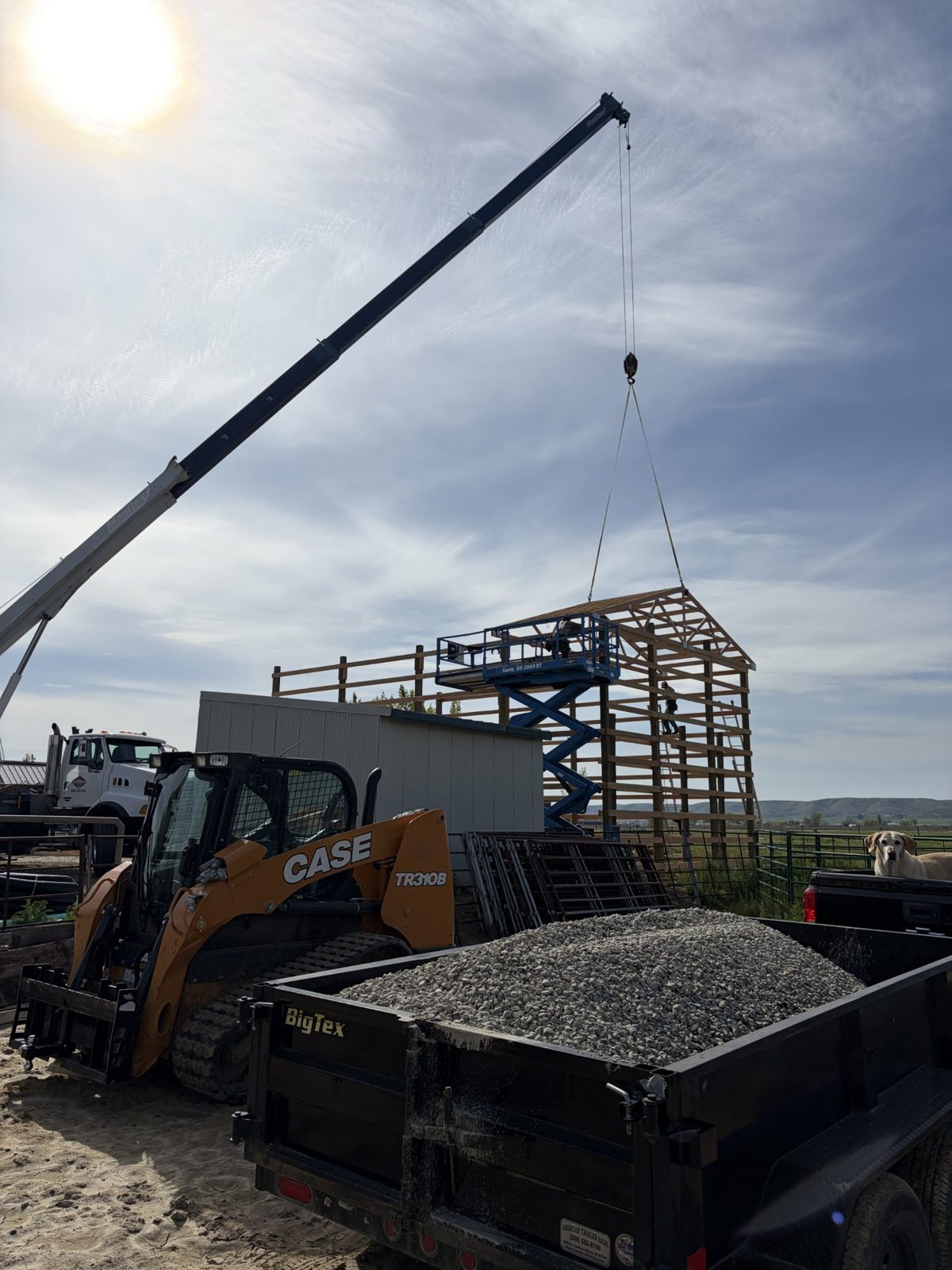
Some days on the ranch are quiet. The day the hay barn went up was not one of them. There was a crane truck in the yard, a scissor lift working the top of the frame, a track loader moving gravel, and a very interested yellow Lab supervising from the back of a pickup.
Why a hay barn first
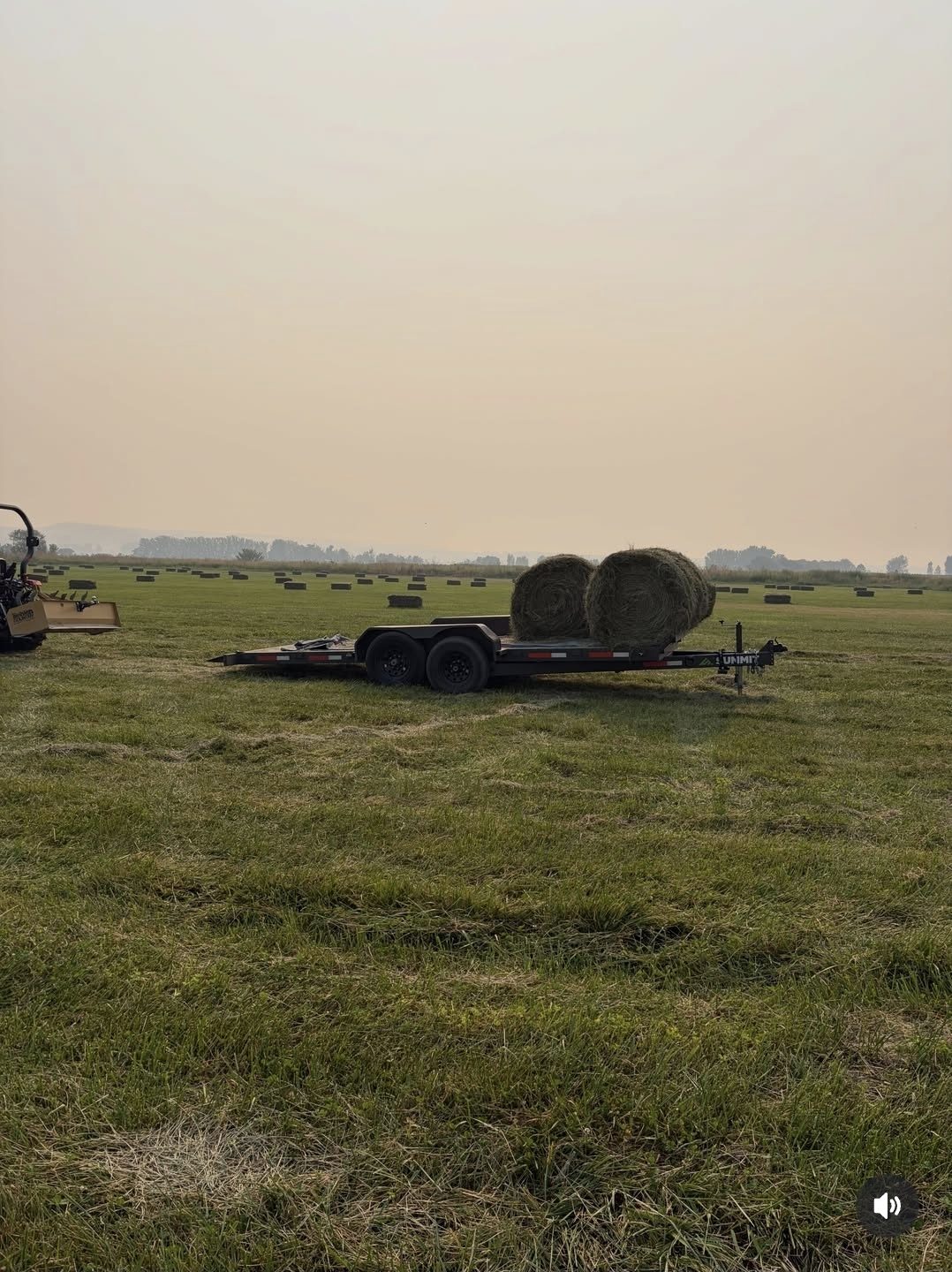
It might seem odd to build a home for hay before building one for horses. But for a rescue, hay is everything. It's the single biggest cost of keeping a horse, and it's the first thing a starved horse needs. A rescue that can't store hay has to buy it a little at a time, at whatever price the market says that week.
With a proper hay barn, we can buy or put up a full winter's supply in summer, when it's available and the quality is good, and keep it dry until we need it. Hay that gets rained on or sits on wet ground grows mold, and moldy hay can make horses sick. A roof and a raised, dry floor protect both the hay and the horses who eat it.
How it went up
The barn is a pole-frame building, a common design for farm storage. Big posts are set deep in the ground first. Then the roof trusses, the triangle-shaped frames that hold up the roof, are lifted into place one by one with the crane and fastened at the top while the crew works from the lift. Once the trusses are up, horizontal boards called purlins and girts tie everything together, and the metal roof and siding go on last.
Watching a truss swing up into the sky on a cable is a little nerve-wracking. Watching it land exactly where it's supposed to, and seeing the shape of the building appear in a single afternoon, is one of the best feelings of this whole project.
Built to last, and to be safe
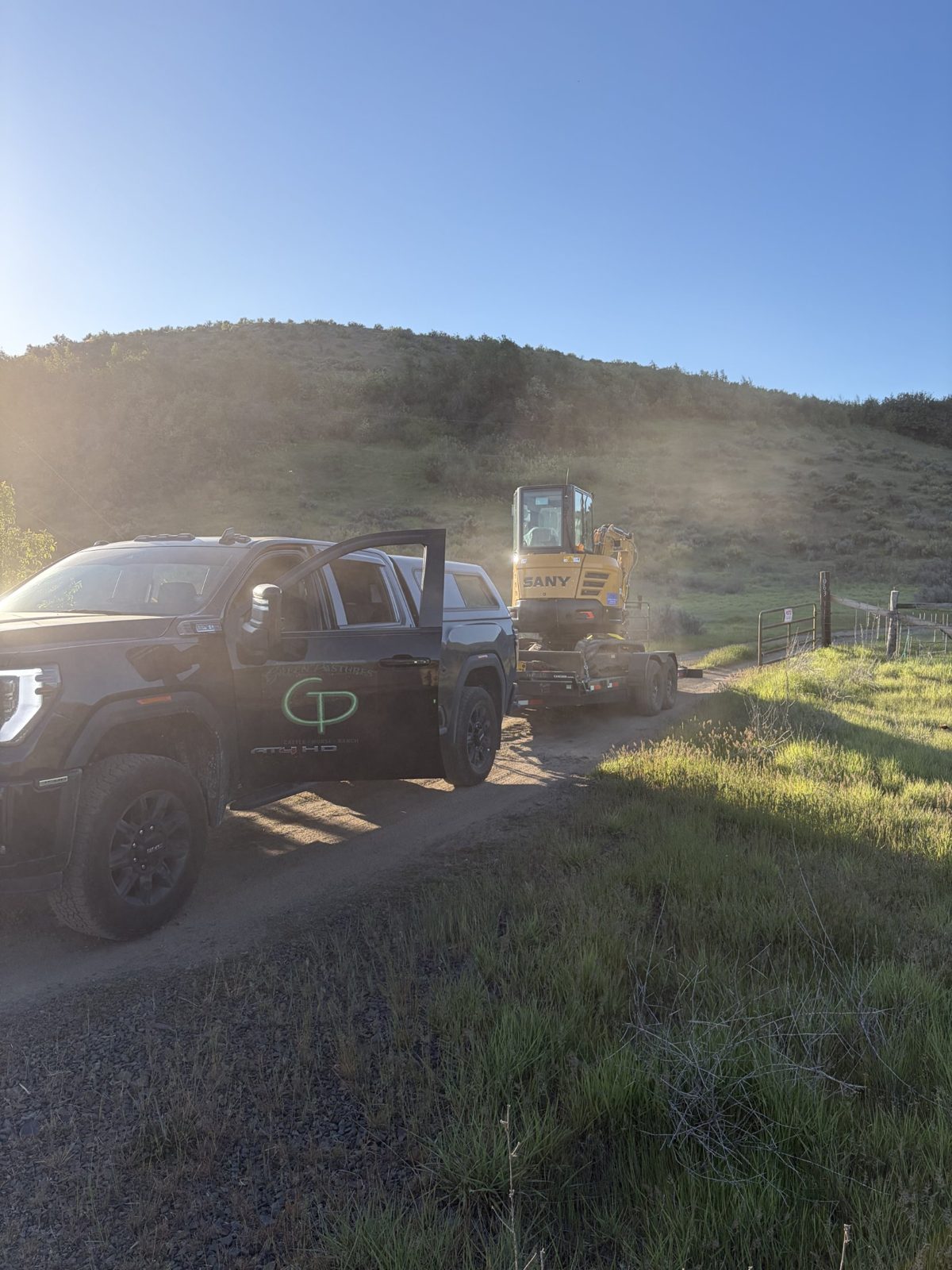
We kept the hay barn separate from where the horses will be stalled. That's standard advice for horse properties: hay is a fire risk, especially if it's baled a little too wet, and keeping it apart from the animals is one of the simplest ways to keep everyone safe. The gravel base around the barn keeps the ground firm for the loader and trailers, even in a wet spring.
[Yen's notes: the barn's size, how many tons of hay it holds, who built it and anything that went sideways on lift day.]
What it means for the horses
A full hay barn going into winter means peace of mind. It means that when a call comes in about a thin horse in January, we can say yes, because we know we can feed it.
Fill the hay barn.
A gift of $150 covers a month of hay for one horse. We'll send you a photo of who you fed.
Give now