BUILDING GREEN PASTURES
Water to every paddock, below the frost line
Trenches, frost-free hydrants and automatic waterers, so no horse goes thirsty in January.
Yen Lee · 3 min read
A horse can go weeks without food but only days without water. A full-grown horse drinks roughly 5 to 10 gallons a day, and often more in summer heat or while working, and dehydration in winter is one of the quiet causes of colic. On an Idaho ranch, the hard part isn't having water. It's keeping it from freezing in January.
So before a single rescue arrives, we dug.
Going deep
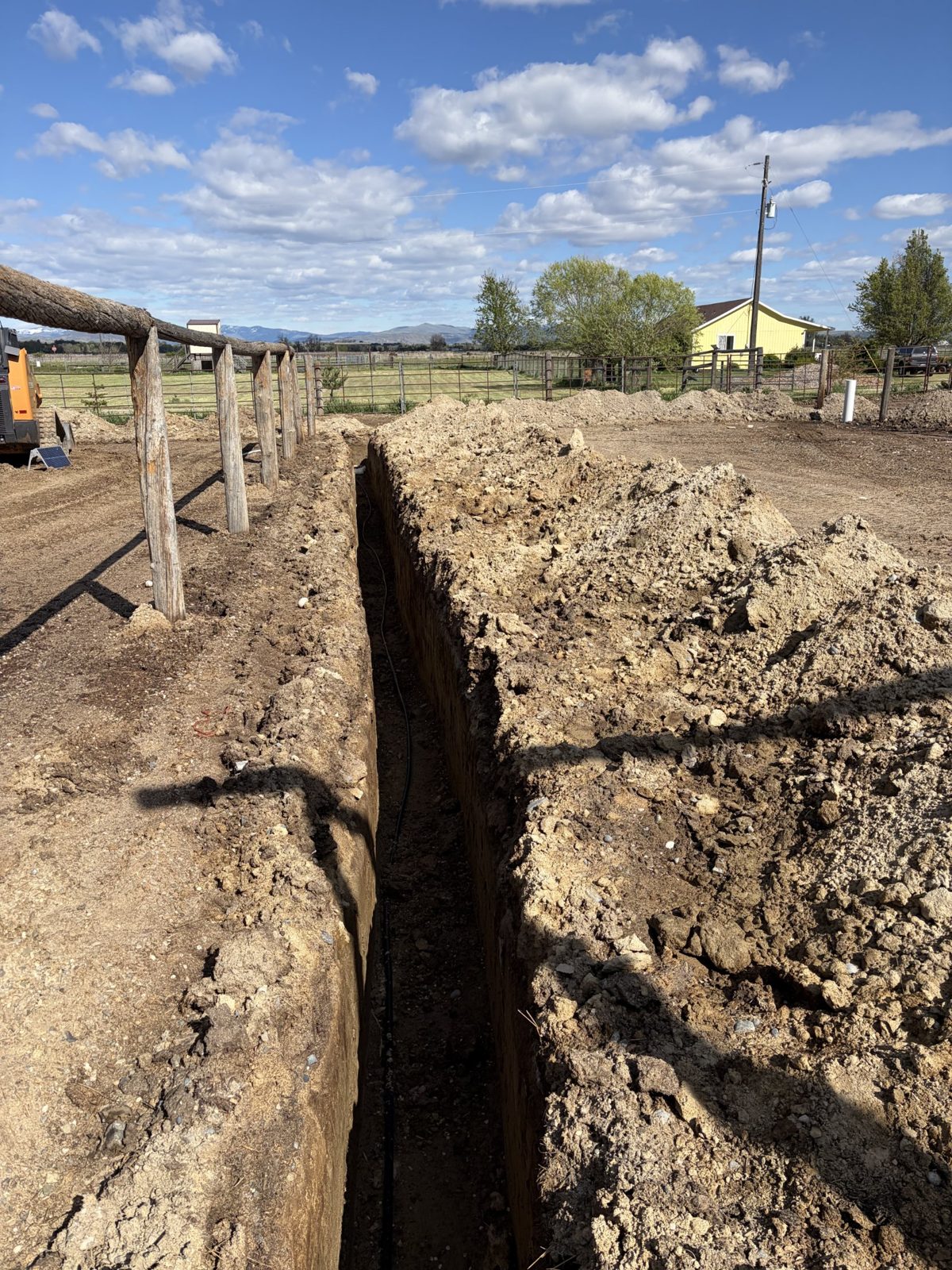
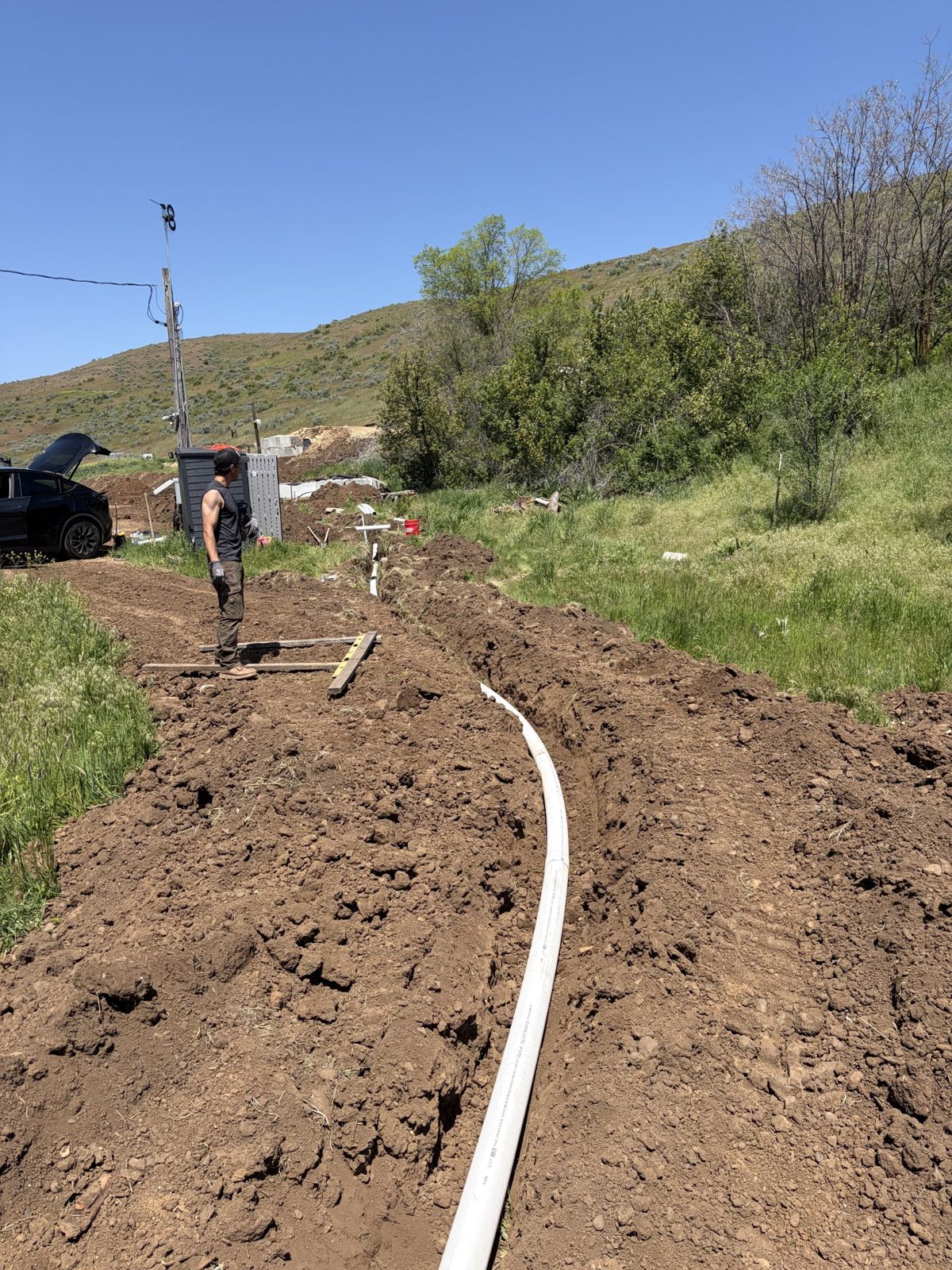
Long trenches now run from the water source out to the barn and the paddocks. They're deep enough to keep the lines below the frost line, where the ground stays above freezing all winter. It's slow, heavy work, and the excavator and a lot of shovel time made it happen.
At the bottom of the trench, the lines sit on a bed of gravel with landscape fabric to keep soil from settling into it. Every joint and valve got checked before anything was buried, because the one thing worse than digging a trench is digging it again to find a leak.
Frost-free hydrants
At key spots we set frost-free yard hydrants. The valve on these sits down at the bottom, below the frost line, not up at the handle. When you shut the hydrant off, the water left in the standpipe drains back down and out into a gravel bed, so there's nothing left above ground to freeze and split the pipe. Each one sits on a solid block so it stays plumb for years.
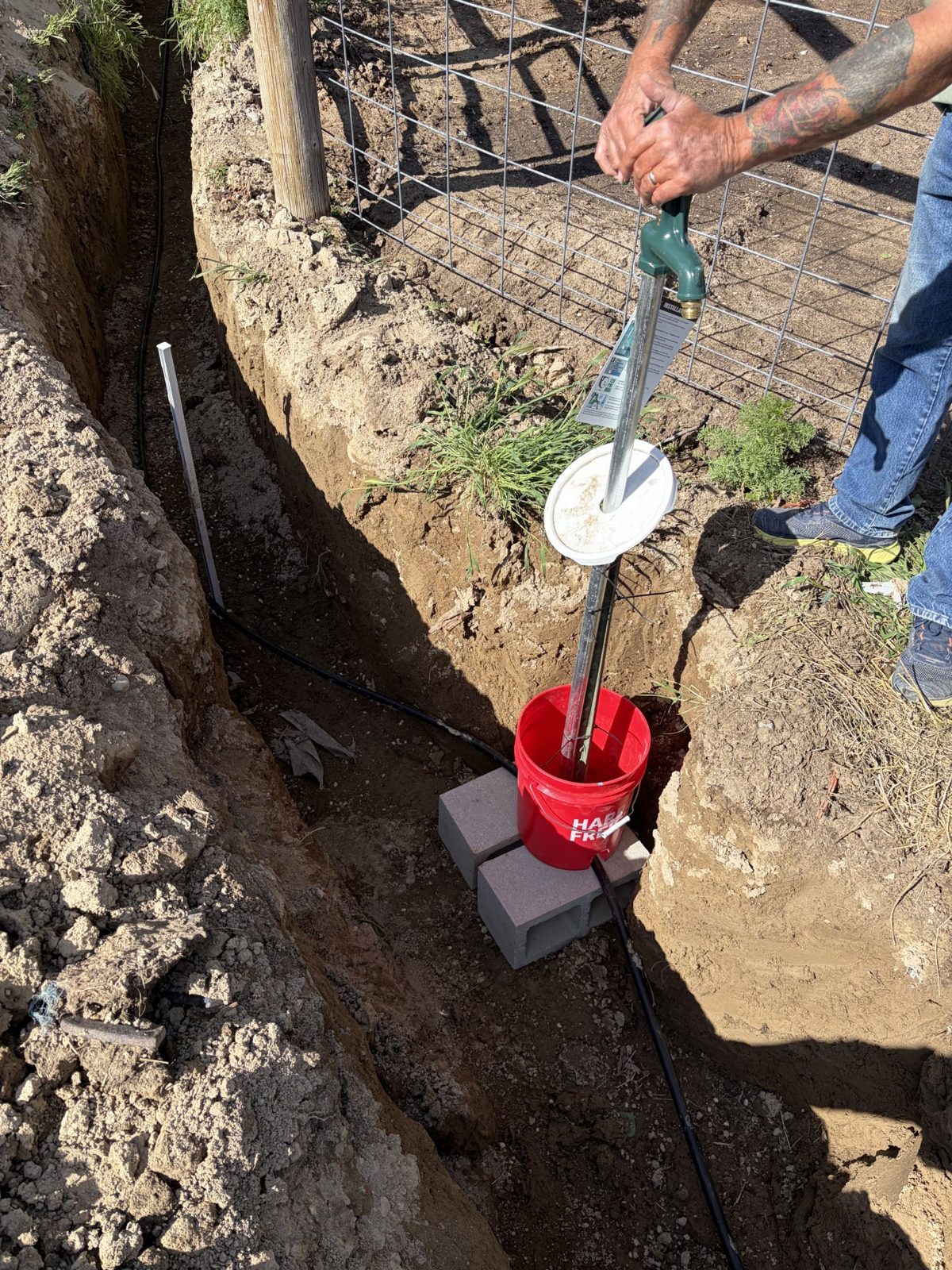
Hydrants are what we'll use for filling buckets, cleaning, and anything that needs a hose. They're also our backup if anything ever goes wrong with a waterer.
Automatic waterers
In the paddocks, we installed automatic waterers. They're built to keep water open through cold weather, and they refill on their own as horses drink. That means every horse has fresh water around the clock, even on the coldest mornings, without anyone chopping ice off a tank at 6 a.m.
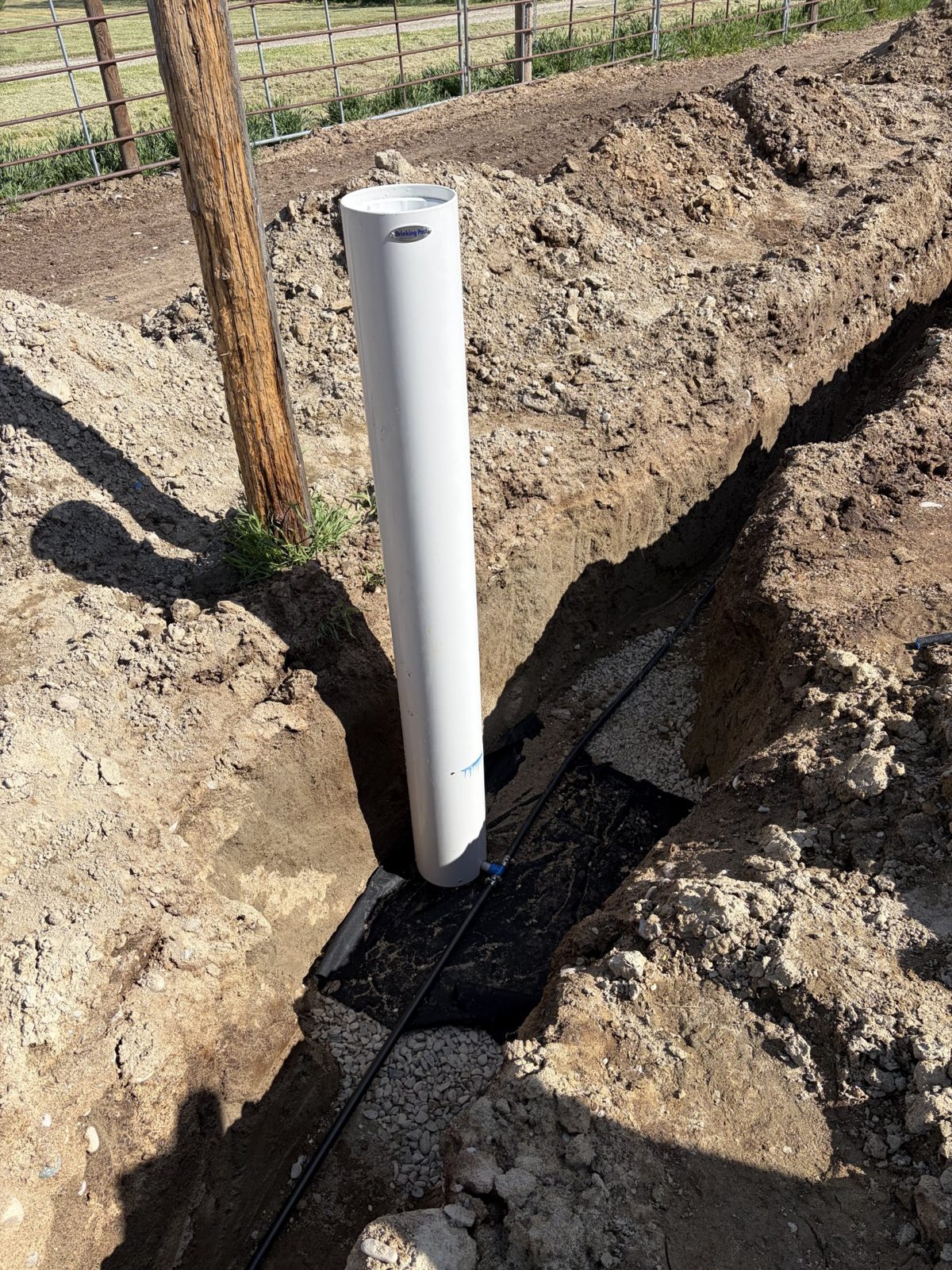
For a rescue, that matters even more. A horse coming in underweight or stressed needs to drink well to recover, and a scared horse may not walk up to a big, unfamiliar tank. A small, quiet waterer in their own paddock is easier to trust.
[Yen's notes: how deep the trenches went, how many hydrants and waterers are in, and who helped dig.]
Why we did it now
It would have been faster to drop a stock tank in each paddock and run a hose. But hoses freeze, tank heaters fail, and horses knock things over. Doing the water right, once, means we spend our winters caring for horses instead of fighting frozen pipes.
Help us finish the build.
Fencing and electrical are next. Every gift goes straight into getting the first rescue paddocks ready.
Give now