HORSE SENSE
Hoof boots 101 for trail horses
When boots beat shoes, how to fit them, and what to watch for on rocky ground.
Yen Lee · 3 min read
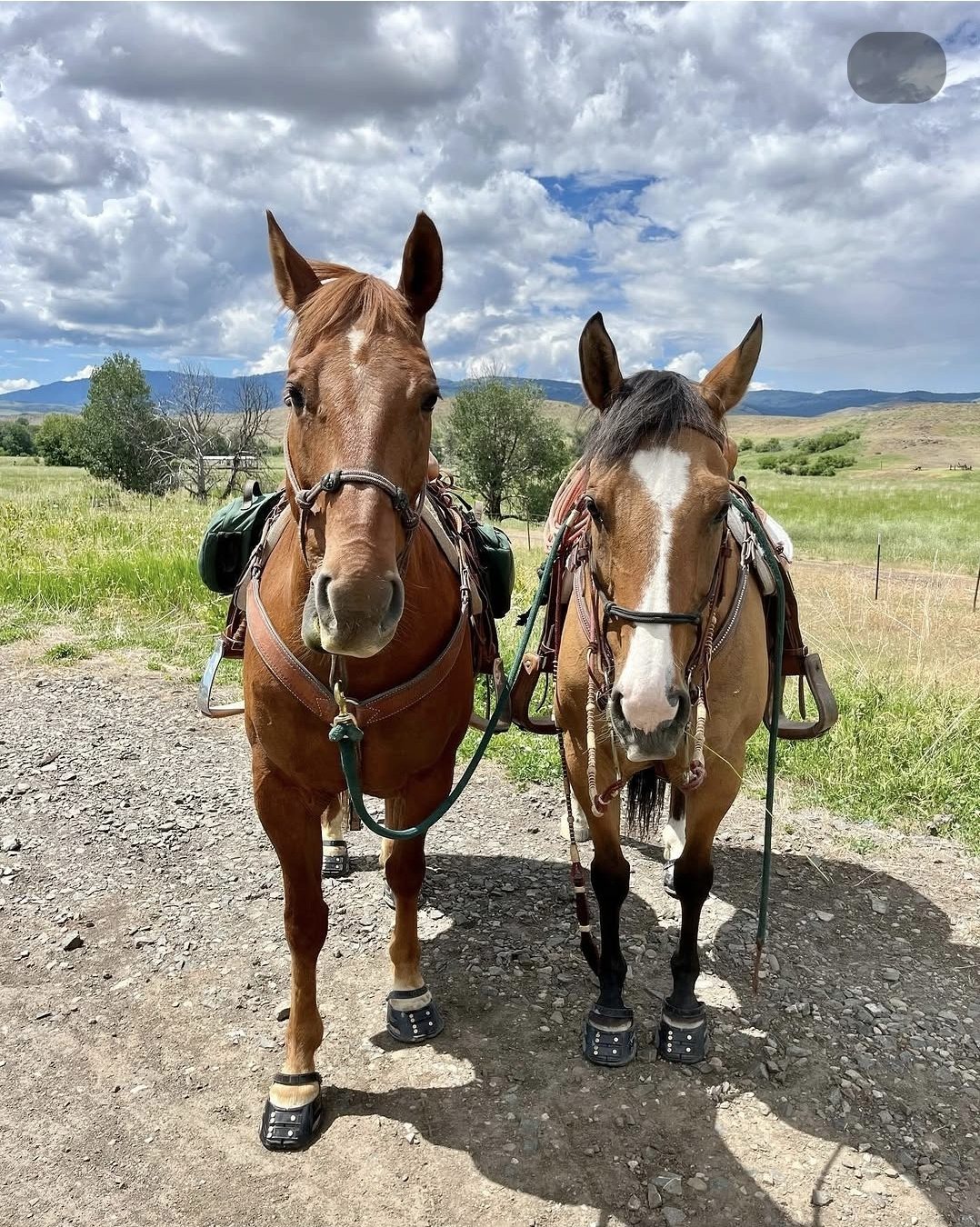
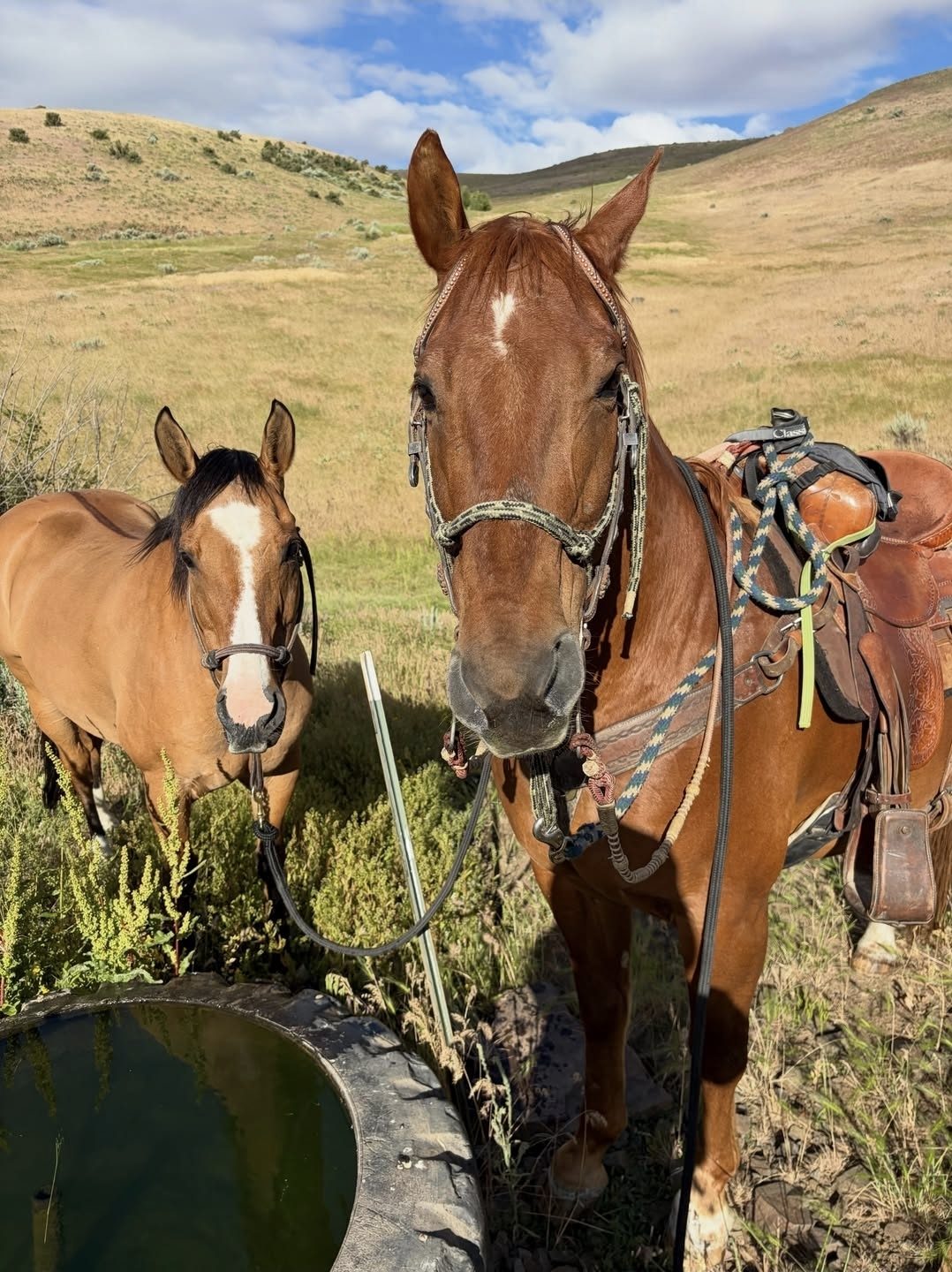
Look closely at our trail horses and you'll notice something on their feet: hoof boots. A lot of people ask us about them, so here's a plain-language guide to what they are and when they make sense.
What hoof boots are
Hoof boots are removable, rubber or plastic shoes that strap onto a horse's hoof. Unlike metal horseshoes, which a farrier nails on and leaves for weeks, boots go on before a ride and come off after. The rest of the time, the horse goes barefoot.
When boots make sense
Many horses do well barefoot most of the time but get sore on rocky or gravel ground. Idaho trails have plenty of both. Boots give those horses protection exactly when they need it, without full-time shoes.
Boots are also useful for rescue horses whose feet are recovering from neglect. A horse that arrives with overgrown, cracked hooves needs regular trims to get back to healthy feet, and boots can make walking on hard ground comfortable while that happens. Your farrier and vet should always be part of that decision.
Getting the fit right
Fit is everything. A boot that's too loose can twist or come off on the trail. One that's too tight can rub. Most brands size boots by measuring the width and length of the hoof's sole, and it's best to measure right after a fresh trim, since the hoof will grow between trims.
- Measure after a trim, and recheck as the hoof grows
- Try the boots on and walk the horse before your first ride
- Watch for rubs on the heel bulbs and pastern after each ride
- Keep the boots clean, since grit inside causes rubs
Break-in and care
Start with short rides so your horse gets used to the feel, and check for rubs afterward. Rinse the boots and let them dry. Most boots aren't meant to be left on for turnout all day, so take them off when the ride is done.
Boots or shoes?
There's no single right answer. Some horses need shoes for medical reasons or heavy work. Others do great barefoot with boots for the rocky days. The best choice depends on the horse, the work, and the ground, and it's always worth asking your farrier.
[Yen's notes: which boots our horses use, and any tips learned the hard way.]
Keep a horse on its feet.
$25 a month covers a farrier trim every other month for a rescue horse.
Give now