BUILDING GREEN PASTURES
Setting posts before the ground freezes
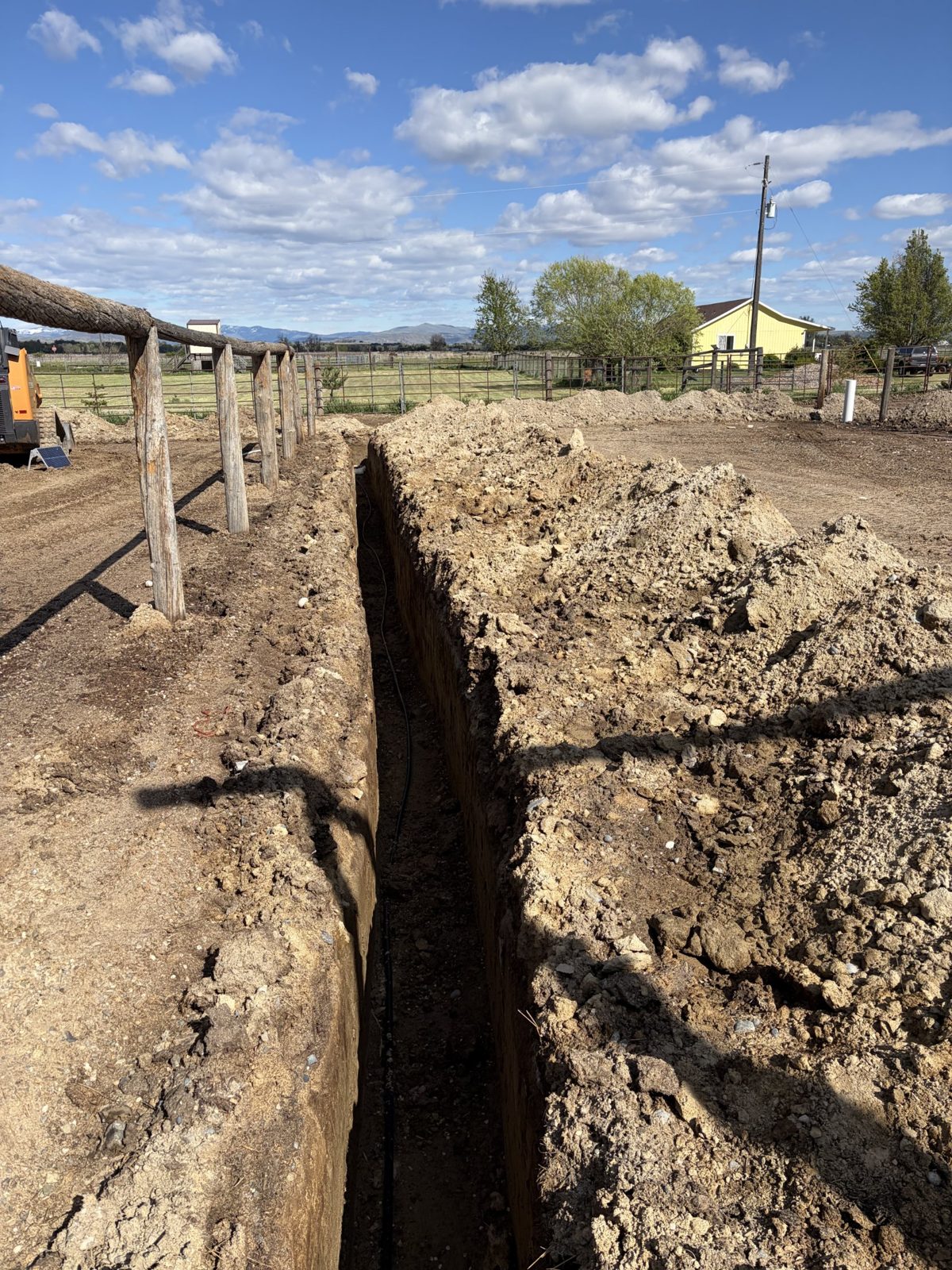
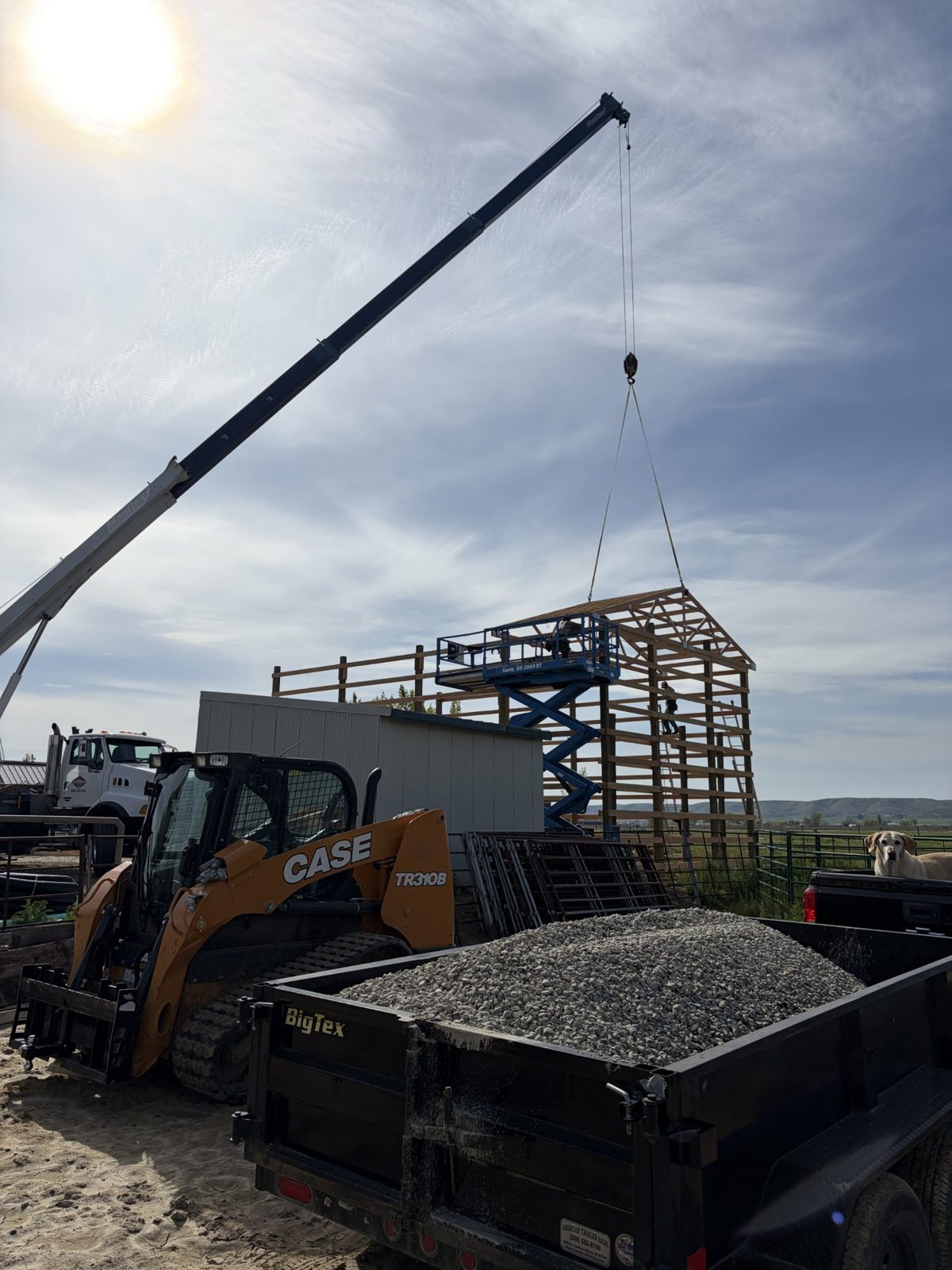
The hay barn and water lines are in. Now it's a race against winter to get fence posts set so the first rescues have safe paddocks.
Yen Lee · 3 min read
There's a deadline every fall on a ranch in Emmett, and it isn't on any calendar: the day the ground freezes. Once the top of the soil locks up, setting a fence post goes from an afternoon job to a fight. So right now, every dry day is a fence day.
The hay barn is up and the water lines are in, which means feed and fresh water are handled. What's left before the first rescue horses arrive is the part they'll actually live with every day: the fences, the gates and the paddocks.
Why fencing comes first
A rescued horse often shows up thin, sore, frightened, or all three. Many have never been handled kindly, and some have spent time behind barbed wire or broken panels. The first thing they need from us is a space where they can't get hurt and can't get loose. Good fencing is the difference between a horse that settles in and a horse that spends its first week pacing the fence line looking for a way out.
That's why we're not cutting corners here. Horse fencing needs to be tall enough that a horse won't think about jumping it, solid enough that a horse leaning on it won't push it over, and visible enough that a spooked horse sees it before it runs into it.
Doing it the hard way, once
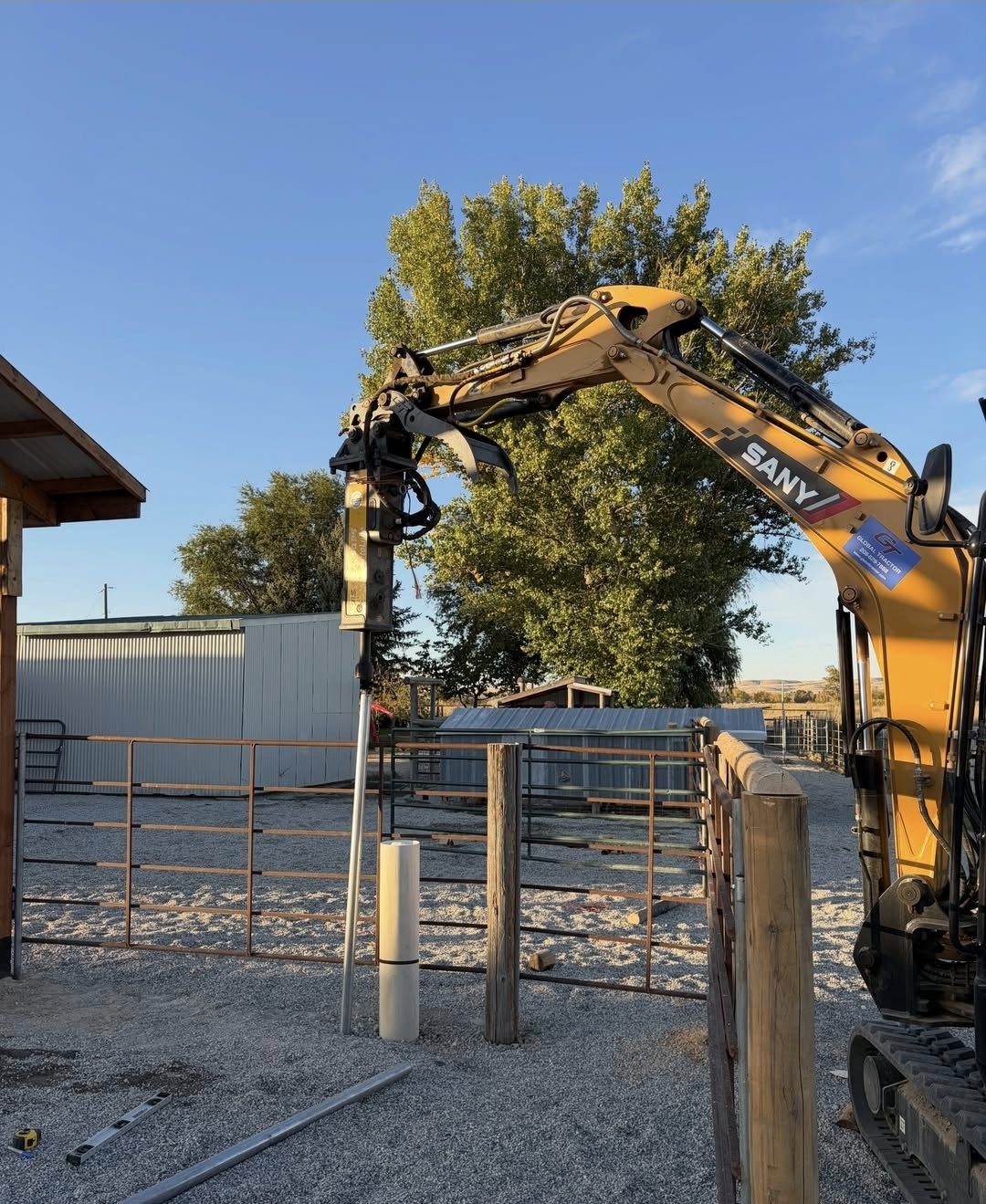
The excavator has earned its keep this fall. With a post driver on the arm, we can drive steel posts straight and deep in a fraction of the time it takes by hand. The corner and gate posts get the most attention, because that's where all the tension in a fence line ends up. A crooked corner post means a sagging fence by spring.
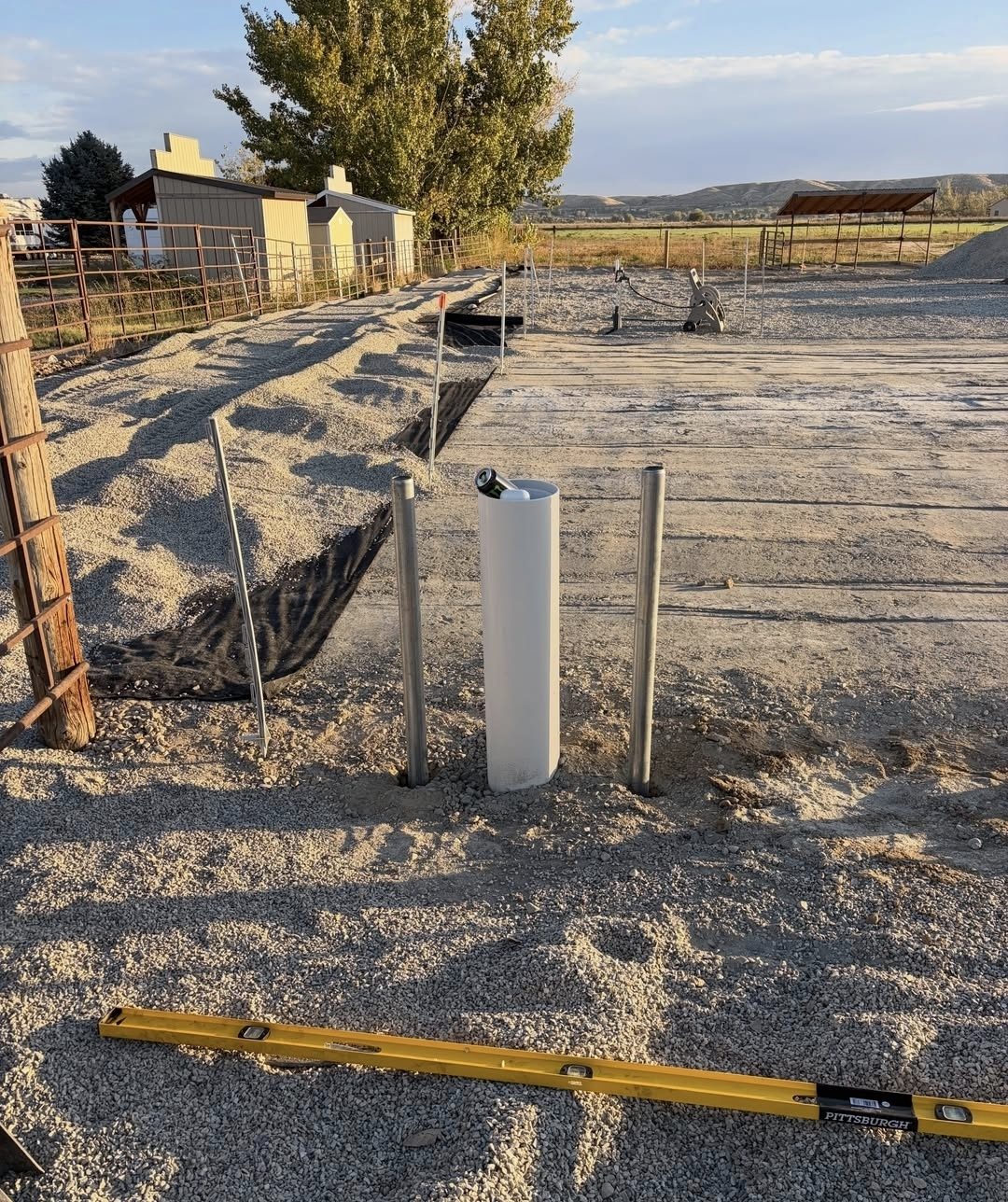
Around the barn and the water points we laid gravel over landscape fabric before setting posts. Horses gather wherever there's food and water, and those spots turn to mud fast in an Idaho spring. A gravel base keeps hooves out of the muck, which helps prevent thrush and abscesses, and keeps the posts from working loose in wet ground.
Paddocks with a purpose
The layout matters as much as the fence itself. Every new arrival spends time in a separate quarantine paddock before meeting the herd, so we can watch for illness and give them time to decompress. From there, horses move into small paddocks where they can see and smell their neighbors over the fence, and finally out into larger turnout once they're healthy and settled.
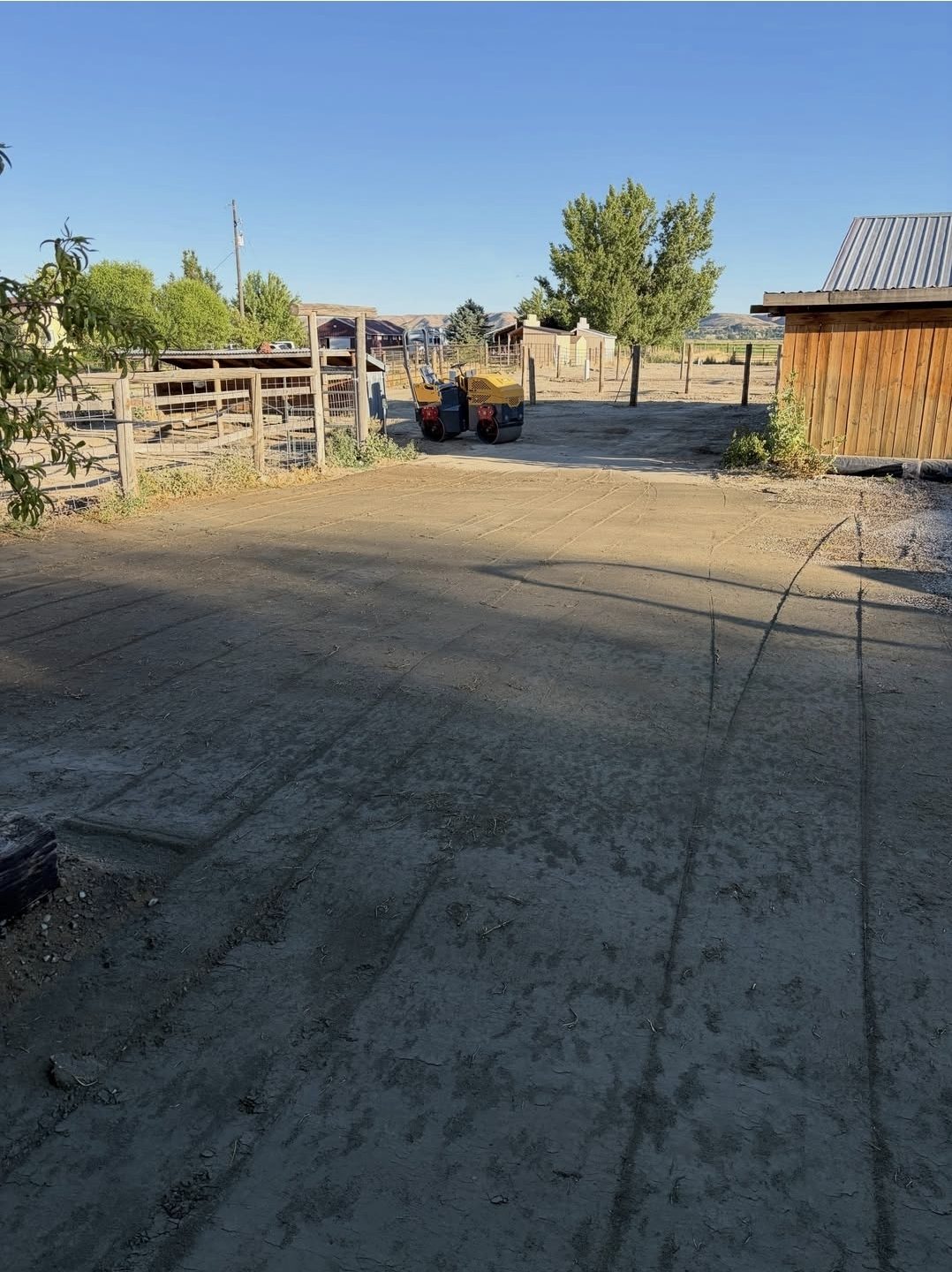
[Yen's notes: how many posts went in this week, how many feet of fence are left, and the moment something went wrong and got fixed.]
What's next
Once the perimeter and paddocks are done, the electrical work gets finished so we have light in the barn on short winter evenings. Next year brings the bigger projects: an arena, a corral system, sprinklers for the hay field and lighting, so we can work with horses year-round and host clinics for the community.
Every fence we build now is a horse we can say yes to later.
Help us finish the fences.
Every gift this month goes to posts, panels and gates for the first rescue paddocks.
Give now